
Rancho Santa Fe family law
Community Property When the Home Is Owned Outright
A paid-off Rancho Santa Fe home is still divided equally if it is community property. How § 2640 reimbursement, valuation at trial and filing in Vista apply.
- California dissolution, custody and support
- Family lawCalifornia dissolution, custody and support
- Family cases filed in the North County Division
- Rancho Santa FeFamily cases filed in the North County Division
- What the court record keeps private, and what it does not
- PrivacyWhat the court record keeps private, and what it does not
- Confidential, private case handling
- DiscreetConfidential, private case handling
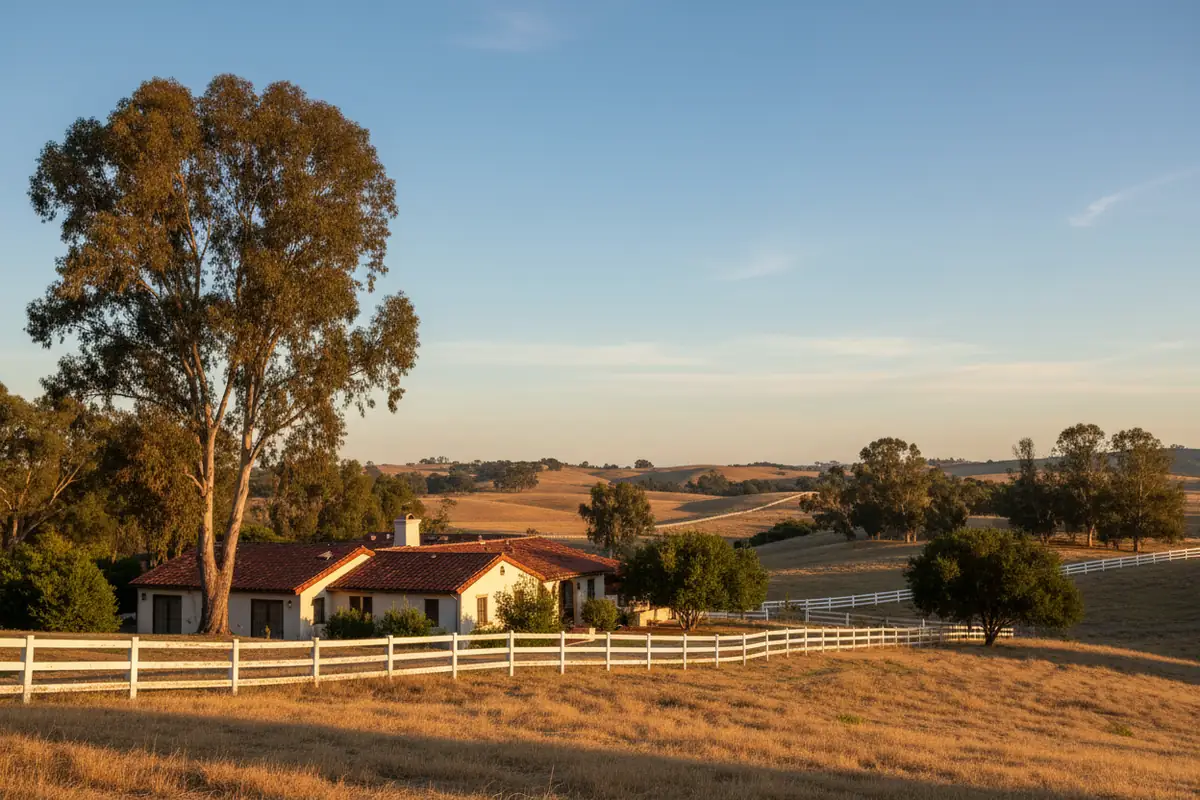
A home in Rancho Santa Fe that carries no mortgage is divided in a California divorce the same way as any other community property. If the house is community property, the court generally divides it equally. A missing loan does not take it out of the division. If separate money helped buy it or pay it off, the spouse who put in that money may be reimbursed.
Most people searching for help with property division in Rancho Santa Fe are not starting with a legal question. They are starting with a house. It may be the place where the children grew up, a property one spouse inherited money to pay off, or a Covenant lot that has been in the family's life for decades. Now a separation, or the thought of one, has turned that home into a question nobody wanted to ask: whose is it, and what happens to it? The answer depends on a handful of California rules and the facts behind them. Those facts include where the money came from, how title reads, and when the court will put a value on it. This page covers how those rules apply to a home owned outright, and where a Rancho Santa Fe case is filed and heard.
California's Equal-Division Rule and What It Means for a Paid-Off Home
Family Code section 2550 sets the baseline. In a divorce or legal separation, the court divides the community estate of the parties equally. The community estate is the property and debts that belong to the marriage as a unit. The spouses can change that result by written agreement or by an oral stipulation made in open court, and the rule also gives way where the Family Code provides otherwise. Apart from those exceptions, the rule is equal division.
Two other statutes decide what goes into that estate. Under Family Code section 760, property acquired by a married person during the marriage while living in California is generally community property. Under Family Code section 770, separate property includes property owned before the marriage and property received by gift, bequest, devise or descent, along with its rents, issues and profits. In plain terms, separate property is what one spouse owned before marrying or received as a gift or inheritance. Characterization means deciding which category a piece of property falls into. It is the first question in nearly every property case, and it matters more when there is no lender's file to show how the house was paid for.
A home with no mortgage can feel simpler. Often it is not. With no loan, there is no monthly statement showing whose money went in, no refinance that re-papered title, and sometimes no single document showing when the last payment came from an inheritance rather than wages. The equal-division rule applies to a home owned free and clear exactly as it applies to a home with a large loan. The absence of debt changes the math of net value. It does not change the law.
That situation is common here. According to the U.S. Census Bureau, American Community Survey 2020-2024 5-year (table B25081), 44.3% of owner-occupied homes in ZIP 92067 carry no mortgage. The same survey reports the median home value in ZIP 92067 as "$2,000,000 or more," which is the Census Bureau's top code for that measure (U.S. Census Bureau, American Community Survey 2020-2024 5-year, table B25077). When a home is both valuable and unencumbered, it is often the largest single item in the community estate. The questions about how it was acquired carry real weight.
Rancho Santa Fe also has a property history of its own. The County of San Diego's San Dieguito Community Plan records that the Rancho Santa Fe Association, a homeowners association, was formed as a non-profit corporation on July 14, 1927. The Association adopted a Protective Covenant that used deed restrictions to maintain community style. The plan states that the Covenant area covers approximately 6,720 acres with approximately 1,900 residential building sites. It also states that lot sizes within the Residential areas of the Covenant are to be preserved at 2.86 acres and 2 acres. For a divorcing couple, these facts matter because a Covenant home is real property with its own recorded restrictions. The deed and its history become part of the record the court reviews when it decides what the property is and who owns it.
The same plan places Rancho Santa Fe among nearby communities such as Fairbanks Ranch, Whispering Palms, Rancho Cielo and 4S Ranch. The equal-division rule is the same in each of them, because it is state law.
When Separate Property Went Into the Home: Reimbursement Under Family Code § 2640
Family Code section 2640 is often the central issue when a home is owned outright. It covers a spouse who used separate money to help acquire property that is now community property. Unless that spouse signed a written waiver, or a writing that has the effect of one, the spouse is reimbursed for those contributions in the division of the community estate. The spouse must trace the contributions to a separate-property source.
The statute defines "contributions to the acquisition of property." They include down payments, payments for improvements, and payments that reduce the principal of a loan used to buy or improve the property. They do not include interest payments or payments for maintenance, insurance or property taxes. That definition fits several situations families in Rancho Santa Fe raise:
- A separate-property down payment. One spouse used money saved before the marriage toward the purchase of a home that was then taken as community property.
- An inheritance used to pay off the loan. A spouse received an inheritance during the marriage and used it to pay off the remaining principal. Principal reduction counts as a contribution under section 2640(a).
- Separate funds used for improvements. Separate money paid for improvements to a community home also counts. Ordinary upkeep and the tax bill do not.
The reimbursement has firm limits. Under section 2640(b), the amount is paid without interest or any adjustment for changes in monetary values, and it may not exceed the net value of the property at the time of division. The contributing spouse gets back the contribution, not a share of the home's appreciation. Any increase in value above the reimbursed amount remains part of the community estate and is divided equally under section 2550.
Section 2640(c) addresses a related case. A spouse who puts separate money into the other spouse's separate property during the marriage is also reimbursed, unless there was a written transmutation or a written waiver. The same limits apply: no interest or adjustment for changes in monetary values, and no more than the net value of the property at the time of division. A transmutation is a change in the character of property, for example from separate to community. Family Code section 852 states that a transmutation is not valid unless it is made in writing by an express declaration made, joined in, consented to or accepted by the spouse whose interest is adversely affected. Under section 852(e), that rule does not apply to a transmutation made before January 1, 1985, which is still judged by the law that would otherwise apply to it. For real property, a transmutation is not effective against third parties without notice unless it is recorded. A deed that moved a Rancho Santa Fe home from one spouse's name into both names can therefore become a central document in the case.
Tracing is the work of connecting money to its source, such as an account statement, an inheritance distribution or a closing statement. Section 2640 places that burden on the spouse claiming reimbursement. When a home was paid off years ago, the documents that show the source can be the hardest part of the case to assemble.
Moore/Marsden is a different rule, and it runs the opposite direction. It takes its name from two California court decisions. It applies when community money, usually earnings during the marriage, paid down a loan on a home that is one spouse's separate property. The community may then hold an apportioned interest in that separate-property home. Section 2640 is the reverse case: separate money going into community property, or into the other spouse's separate property. Which rule applies depends on how the home was characterized in the first place. Applying the wrong one changes the result.
Whatever the source, Family Code section 721 places spouses in a fiduciary relationship with each other in their dealings. That relationship carries a duty of the highest good faith and fair dealing, and on request, true and full information about transactions concerning community property.
The Automatic Restraining Orders That Apply from the Day of Filing
Once a California divorce or legal separation case begins, standard restraining orders on property apply automatically: to the spouse who files from the filing, and to the other spouse from service. They are often called ATROs, short for automatic temporary restraining orders. They appear on the summons. In general, they restrict either spouse from selling, transferring, borrowing against, hiding or otherwise disposing of property without the other spouse's written consent or a court order. That restriction covers a home owned outright.
For a paid-off home, the practical effect is direct. A house with no lender on title can seem easy to sell, refinance, or move into a trust. Once a case is underway, those steps generally need the other spouse's written agreement or an order from the court. The petitioner is bound when the petition is filed. The respondent is bound once served.
Many readers find this the most unsettling part of the process: a home they may have managed alone for years now has limits they did not choose. The orders are not a finding that anyone did something wrong. They hold the property in place while the court decides who owns what. The exact scope and limits of the orders are printed on the summons itself. When a specific transaction is in question, the wording on that document controls.
How the Court Values the Community Estate
Family Code section 2552 sets the timing. For dividing the community estate, the court values assets and liabilities as near as practicable to the time of trial. On 30 days' notice from the moving party, and for good cause shown, the court may value all or part of the estate at a date after separation and before trial, to accomplish an equal division in an equitable manner.
The date of separation still matters for other reasons. Under Family Code section 771, each spouse's earnings and accumulations after separation are that spouse's separate property. But the house itself is not frozen at its separation-date value. Where the home's value has moved while the case is pending, the timing rule in section 2552 can shift the numbers significantly.
A paid-off home's value is decided on the evidence, typically through a licensed appraiser's report. For Covenant property, an appraisal reflects the land as well as the house: lot size, recorded restrictions. Where the spouses disagree about value, the court decides between the competing evidence.
The house is rarely the only asset. According to the U.S. Census Bureau, American Community Survey 2020-2024 5-year (table B19054), 45.7% of households in ZIP 92067 have interest, dividend or net rental income. Investment accounts and rental property acquired during the marriage may be part of the community estate along with the home. Where a spouse owns a business, its value can include goodwill, and that value is decided on the evidence, often with experts.
If an asset is missed, Family Code section 2556 gives the court continuing jurisdiction to divide community assets or debts the judgment did not address. A party may bring a postjudgment motion, and the court generally divides the omitted item equally.
Where Rancho Santa Fe Property Division Cases Are Filed and Heard
The San Diego Superior Court assigns family cases by ZIP code. Most family law cases from Rancho Santa Fe ZIP codes are filed in the North County Division, at the Superior Court of California, County of San Diego, North County Regional Center, 325 South Melrose Drive, Vista, CA 92081. Hearings on property issues, including disputes over the Rancho Santa Fe home, take place in that division.
Two statutory clocks shape the early part of a case.
The six-month waiting period. Under Family Code section 2339, a judgment of dissolution cannot end the marriage until six months have passed from the date the summons and petition are served or the date the respondent appears in the case, whichever occurs first. The court may extend that period for good cause. The clock does not start at filing. The waiting period controls when the marriage can end, not how long property issues take. A case with a contested home and a disputed reimbursement claim can take longer.
The preliminary declaration of disclosure. Under Family Code section 2104, each spouse serves the other with a preliminary declaration of disclosure, signed under penalty of perjury. It must identify all assets and debts in which the spouse has or may have an interest, whether community, quasi-community or separate. Under section 2104(f), the petitioner serves it with the petition or within 60 days of filing the petition. The respondent serves it with the response or within 60 days of filing the response. The spouses may extend those periods by written agreement, or the court may extend them by order. When the petitioner serves the summons and petition by publication or posting under a court order and the respondent files a response before a default judgment is entered, the petitioner serves it within 30 days of the response being filed. The declaration includes all tax returns the spouse filed in the two years before serving it (section 2104(a)) and comes with a completed income and expense declaration, unless a current and valid one has already been provided (section 2104(e)). For a home owned outright, this is often where a spouse first states in writing that a separate-property claim exists.
What the Firm Handles — and the One Limit That Applies
Rancho Santa Fe Family Law Advocates handles property division in divorce and legal separation cases for people in Rancho Santa Fe. Its work includes assessing whether a paid-off home is community or separate property, reviewing deeds and transmutations under section 852, and building or answering section 2640 reimbursement claims through tracing. It also includes evaluating Moore/Marsden questions where community money reduced a separate-property loan, observing the automatic restraining orders while the case is pending, and coordinating appraisals and other valuation evidence under section 2552.
The firm practices California family law only. It is licensed in California, and the law that decides how a Rancho Santa Fe home is divided is California's Family Code.
For a home owned outright, the issues are usually concrete: an old closing statement, a deed signed years ago, an inheritance distribution, or a payoff letter. The firm's work is to connect those documents to the rules above, and to present them where the case is heard.
Talking Through the Rancho Santa Fe Home
A home owned outright depends on facts that general rules cannot settle: where each payment came from, what the deed says and when it changed, and whether a written waiver or transmutation exists. A conversation with the firm can cover those points. It can address how the home is likely to be characterized, whether a section 2640 claim or a Moore/Marsden question is present, and what the automatic restraining orders mean for decisions about the house while a case is pending. That discussion can take place before anything is filed, at whatever pace suits the household.
To talk through how these rules apply to your home, contact Rancho Santa Fe Family Law Advocates to request a confidential consultation.
Frequently asked questions
Is a home owned free and clear still divided equally in a California divorce?
What happens if one spouse used inheritance money to pay off the home?
Can I sell the family home once I file for divorce?
As of what date is the home's value determined?
What is the difference between a § 2640 reimbursement claim and a Moore/Marsden claim?
How long does a property division case in San Diego County take?
Where are Rancho Santa Fe divorce and property division cases filed?
Attorney Contributor: Amy J. Lass | California Bar No. 246779
Amy J. Lass contributes legal expertise and reviews selected legal content for accuracy. General information only — not legal advice.
- Published
- November 9, 2026
Sources
- California Family Code § 2550 — California Legislative Information
- California Family Code § 2640 — California Legislative Information
- California Family Code § 2552 — California Legislative Information
- California Family Code § 2339 — California Legislative Information
- California Family Code § 2104 — California Legislative Information
- California Family Code § 760 — California Legislative Information
- California Family Code § 770 — California Legislative Information
- California Family Code § 771 — California Legislative Information
- California Family Code § 852 — California Legislative Information
- California Family Code § 721 — California Legislative Information
- California Family Code § 2556 — California Legislative Information
- San Dieguito Community Plan (County of San Diego General Plan), County of San Diego Planning & Development Services — sandiegocounty.gov
Questions About Your Case?
Divorce and custody questions rarely fit neatly into an article. Send us a message, and we'll listen to what's going on and help you understand your next steps.