
Rancho Santa Fe family law
Private Judges in San Diego Family Cases: How They Work, and What Stays Public
A private judge in a San Diego family case is paid by both spouses but follows court rules: Form D-008 starts it, hearings stay open, and Form D-319 ends it.
- California dissolution, custody and support
- Family lawCalifornia dissolution, custody and support
- Family cases filed in the North County Division
- Rancho Santa FeFamily cases filed in the North County Division
- What the court record keeps private, and what it does not
- PrivacyWhat the court record keeps private, and what it does not
- Confidential, private case handling
- DiscreetConfidential, private case handling
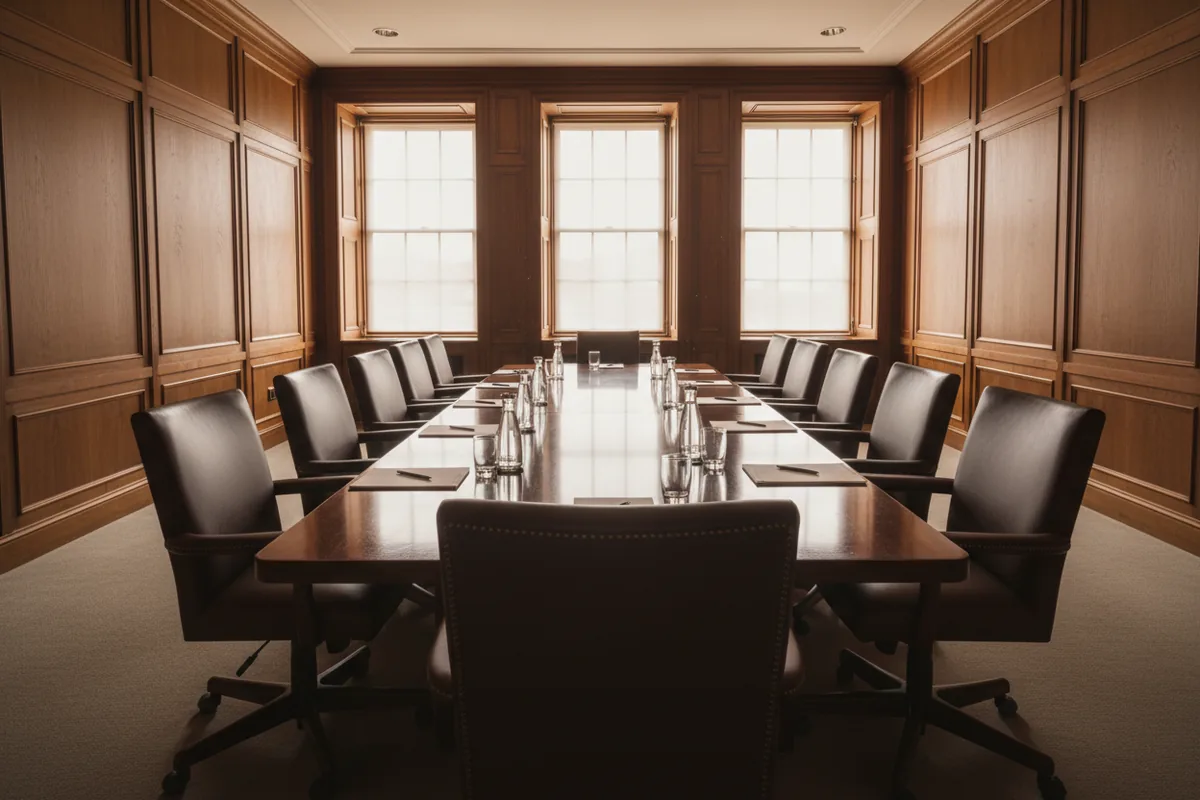
A private judge in a San Diego family case is a temporary judge whom both spouses agree to appoint and pay. The case stays a San Diego Superior Court case. The private judge's rulings are court orders. Hearings that would be public before a regular judge stay public. When the work is done, the case returns to the Superior Court.
Most people facing a divorce from a Rancho Santa Fe home hear about private judges for one reason: they hope it will keep their family's finances, their children and their disagreements out of public view. Some have heard a friend describe the process as "private court." Others are weighing whether a judge they choose and schedule could hear a property or custody dispute more on their own terms. The concept is worth understanding before relying on it, because the rules that govern it are narrower, and more public, than its name suggests.
This page explains what a privately compensated temporary judge is under California law, how the San Diego Superior Court appoints one, what stays open to the public, who pays, where the process tends to come up, and how the appointment ends.
What a Privately Compensated Temporary Judge Is Under California Law
California Rules of Court, Rule 2.830 governs attorneys who serve as temporary judges "at the request of the parties rather than by prior appointment of the court, including privately compensated temporary judges." A temporary judge is an attorney who is authorized, for a particular case, to act as the judge under article VI, section 21 of the California Constitution. The same rule gives the key definition in one line: "'Privately compensated' means that the temporary judge is paid by the parties."
The San Diego Superior Court's own self-help form places this option alongside other private routes. Family Law Self-Help General Information (SDSC Form D-280, Rev. 12/17) states: "Mediation, arbitration, collaborative family law, and the use of a privately compensated temporary judge are methods of ADR." ADR stands for alternative dispute resolution, which means ways of resolving a case outside the regular courtroom calendar.
The temporary judge is the one ADR method on that list that makes rulings in the name of the court. A private arbitrator issues an award under an agreement between the parties. A privately compensated temporary judge, often shortened to PCTJ, sits as a judicial officer in the existing Superior Court case. That person's rulings are court orders, not arbitration awards. The case number, the court file and the court's authority stay the same throughout. What changes is who hears the matter and who pays that person.
How the Appointment Works in San Diego: Form D-008 and the Supervising Judge
San Diego Superior Court Local Rule 5.2.3(C) sets out the procedure. The rule begins: "A request for the appointment of a PCTJ must be made by filing the mandatory Stipulation and Order for Appointment (SDSC Form #D-008)." A stipulation is a written agreement between the parties that is filed with the court. Because the form is a stipulation, both spouses have to sign on to it.
The same rule says the request "shall be filed within five days of the PCTJ signing SDSC Form #D-008 and should be routed directly to the supervising judge of the family law division." The full form title, Stipulation and Order for Appointment of Privately Compensated Temporary Judge With Oath of Office (Rev. 12/25), reflects that the temporary judge also takes an oath of office as part of the appointment.
Once appointed, the temporary judge keeps the case. Local Rule 5.2.3(C) provides that, "Absent a court order withdrawing the appointment, the case will remain with the PCTJ until the mandatory Notice of Case Completion (SDSC Form #D-319) is filed by the PCTJ and accepted by the supervising judge of the family law division." A request to withdraw the appointment is made by a request for order, which "must be directed to and heard by the supervising judge of the family law division."
The case itself still starts in the ordinary way. Under the court's Division V local rules, each family court location is "a separate division and a separate venue according to zip code." Under the San Diego Superior Court's Division V family law local rules, new cases are assigned to a specific judicial officer for all purposes, and the petitioner receives a Notice of Case Assignment that must be served on the respondent with the petition. Most family law cases from Rancho Santa Fe ZIP codes are filed in the North County Division, at the Superior Court of California, County of San Diego, North County Regional Center, 325 South Melrose Drive, Vista, CA 92081. Choosing a private judge does not move the case to another court. The case file stays with the San Diego Superior Court. The Rancho Santa Fe divorce planning checklist walks through the filing steps that come before any of these choices.
What Stays Public: Open Proceedings and the Clerk's Notice
California Rules of Court, Rule 2.834 is the rule that most often surprises people. It states: "All proceedings before a temporary judge requested by the parties that would be open to the public if held before a judge must be open to the public, regardless of whether they are held in or outside a court facility."
A hearing in a conference room, then, is as open as it would be in a courtroom in Vista. The rule also requires notice. The temporary judge files a statement, and "the clerk must post the information from the statement filed by the temporary judge in the court facility." The temporary judge may also list a publicly accessible website with a current calendar showing the date, time, location and general nature of hearings that would be open if held before a judge. San Diego's appointment form, SDSC Form D-008, likewise has the clerk post a notice of the pending matter in the courthouse lobby.
Sealing is handled the same way it would be in any other case. Form D-008 sends motions to seal records to the assigned judge. Hiring a temporary judge does not make a request to seal any easier to grant.
What the spouses do gain is a measure of control over logistics. They agree on who hears the case and can work with that person on scheduling, location and pace. That is a real difference. It is not confidentiality. Choosing a private judge does not make the proceedings confidential. For families whose main worry is the court record, other tools fit that worry more directly, including keeping a home address private and the confidential handling of a custody counselor's report.
Who Pays: Cost Responsibility Under the Court's Mandatory Form
The court's appointment form is direct on this point. SDSC Form D-008 (Rev. 12/25) states: "All fees and costs of the PCTJ are the sole responsibility of the parties." That matches Rule 2.830's definition: a privately compensated temporary judge is one "paid by the parties."
The difference from a regular courtroom is structural. The Superior Court's own judicial officers are paid with public funds as part of the court system. A temporary judge's fees come from the spouses. The fees typically cover the judge's time on hearings, reading filings and writing rulings, and sometimes costs such as a hearing room. This page states no rate or range for those fees because none is published in the court's rules or forms.
How the spouses divide that cost between themselves is something they address when they agree to the appointment. Some split it equally; others agree to a different share. The court's self-help form, SDSC Form D-280, places the private temporary judge among the ADR methods that families use at their own expense, alongside private mediation and arbitration.
When a Private Judge May and May Not Fit a San Diego Family Case
The question of fit often surfaces after months of thinking about how much of a family's life a divorce will put on display. The rules above answer part of it. The facts of the case answer the rest.
Private judges commonly come up in a few kinds of San Diego family cases. One is a case with complicated property questions that both spouses want heard by someone with a particular background in that kind of dispute. Another is a case where the spouses' schedules make a fixed court calendar hard to work around. A third is a case where both sides simply prefer to choose the person who will decide the issues. None of these makes a private judge faster, cheaper or more favorable to either spouse, and nothing in the rules suggests otherwise.
The first boundary is consent. The appointment is made by stipulation on Form D-008, so it depends on agreement. If one spouse does not agree, this route is not available, and the case continues before the judicial officer the court assigned.
The second boundary is that the court's authority and California law still govern. The temporary judge applies the same Family Code that a regular judge applies, to the same issues, from guideline child support to custody.
The third boundary concerns custody and domestic violence. When custody or visitation is contested, Family Code section 3170(a) provides that "the court shall set the contested issues for mediation." Section 3170(b) adds: "Domestic violence cases shall be handled by Family Court Services in accordance with a separate written protocol approved by the Judicial Council." The San Diego local rules also state that "Except in cases involving domestic violence, ADR is encouraged but voluntary." The Division V local rules further provide that if the PCTJ is addressing a restraining order, an SDSC form, listed in the rule only as "SDSC Form #XXX," must be attached to the D-008. A family with domestic violence concerns is in a setting the court handles under its own separate procedures, and that shapes how any private process fits into the case.
How the Case Ends: Notice of Case Completion and Return to Superior Court
The appointment ends with a filing. The temporary judge files the Notice of Case Completion (Privately Compensated Temporary Judge) (SDSC Form D-319, Rev. 11/26), and the supervising judge of the family law division accepts it. The form states: "Jurisdiction is returned to the San Diego Superior Court."
Jurisdiction here means the court's power to act in the case. From that point, the case is again before the Superior Court's own judicial officers. The record does not move or disappear. It was a Superior Court record throughout, and it stays one.
Because the temporary judge's rulings are court orders, they are enforced as court orders. Later requests to change support, custody or visitation go to the Superior Court once the appointment has ended, under the same rules that apply to any other judgment. Changing orders after a private-judge judgment covers that next stage.
If You'd Like to Talk Through Whether a Private Judge Fits Your Case
Whether a private judge makes sense depends on facts that no general page can weigh: what is contested, whether both spouses would agree, what each of them hopes to keep out of view, and whether privacy is better served by other tools the court already provides. Those are worth working through before anyone signs Form D-008. The firm practices California family law only, and this question sits squarely within it.
To talk through how a private judge would work in your own San Diego family case, contact Rancho Santa Fe Family Law Advocates to request a confidential consultation.
Frequently asked questions
Is a private judge in a San Diego family case the same as a private arbitrator?
Are proceedings before a private judge confidential?
Who pays the private judge's fees in a San Diego family case?
How does a San Diego family case get assigned to a private judge?
Can one spouse request a private judge without the other's agreement?
What happens to the case after the private judge's work is done?
Where are Rancho Santa Fe family cases filed?
Attorney Contributor: Amy J. Lass | California Bar No. 246779
Amy J. Lass contributes legal expertise and reviews selected legal content for accuracy. General information only — not legal advice.
- Published
- November 10, 2026
Sources
- California Rules of Court, Rule 2.830: Temporary judges requested by the parties — California Courts
- California Rules of Court, Rule 2.834: Open proceedings; notices of proceedings, use of court facilities, and order for hearing site — California Courts
- Local Rules of Court, Division V: Family Law (effective January 1, 2026), Superior Court of California, County of San Diego — Superior Court of California, County of San Diego
- California Family Code section 3170 — California Legislative Information
Questions About Your Case?
Divorce and custody questions rarely fit neatly into an article. Send us a message, and we'll listen to what's going on and help you understand your next steps.