
Rancho Santa Fe family law
Who Keeps a Covenant Home in a Divorce
California divides a Covenant home under the equal-division rule of Family Code 2550, after separate-property reimbursement. How buyouts, sales and deferred sales work.
- California dissolution, custody and support
- Family lawCalifornia dissolution, custody and support
- Family cases filed in the North County Division
- Rancho Santa FeFamily cases filed in the North County Division
- What the court record keeps private, and what it does not
- PrivacyWhat the court record keeps private, and what it does not
- Confidential, private case handling
- DiscreetConfidential, private case handling
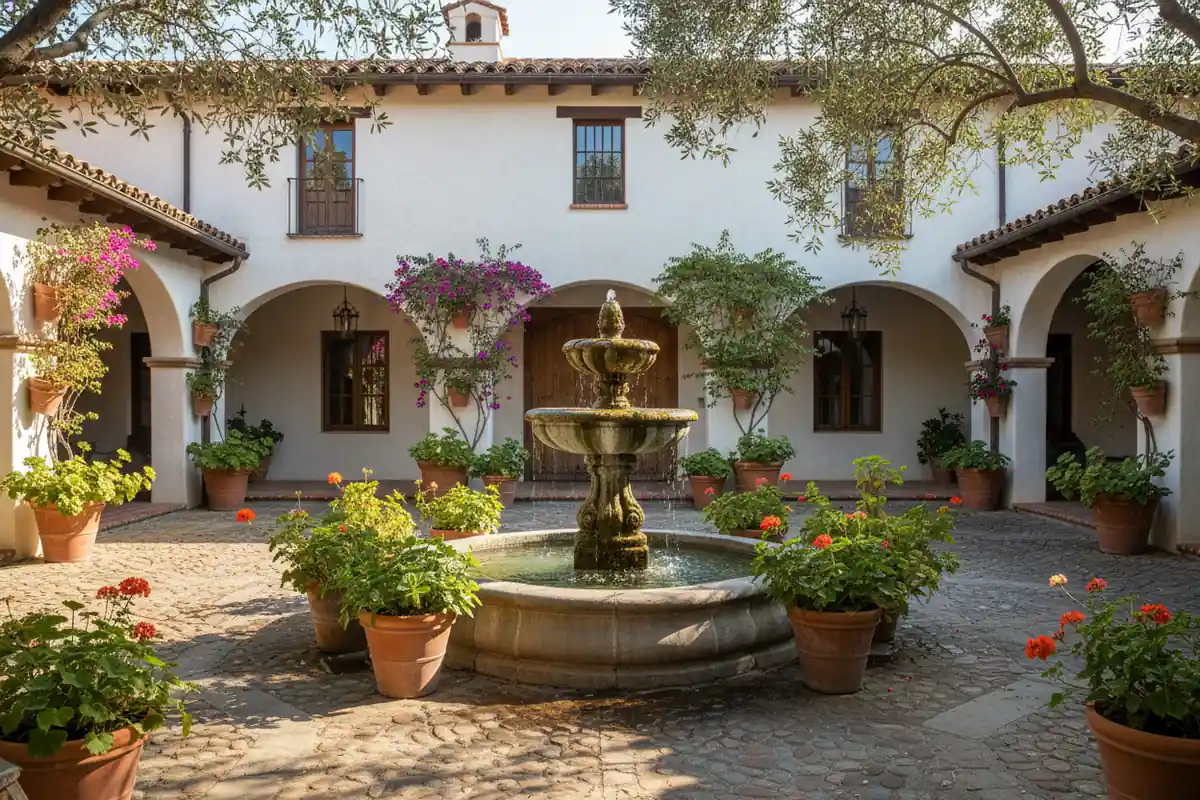
No spouse automatically keeps a Rancho Santa Fe Covenant home in a California divorce. If the home is community property, its value is generally divided equally. One spouse can keep it by buying out the other's share, the spouses can sell it and split the proceeds, or the sale can be put off. Either the spouses agree on which, or the court decides.
Most people facing this question are standing inside the house while they ask it. The kitchen, the children's rooms and the trails off the back of the lot all carry years of family life, and the divorce suddenly makes them a legal question. A spouse in that position usually wants to know some practical things. Does the house belong to both of them? Can one of them stay? Does moving out cost anything? What happens to the home before a judge ever rules? The sections below take those questions in order. They start with the rule California applies, then cover how a Covenant home gets its legal character, what holds the home in place during the case, and where a Rancho Santa Fe case is filed and heard.
What California Community Property Law Says About the Family Home
Family Code section 2550 sets the baseline. Unless the spouses agree in writing, or state an agreement on the record in open court, or the Family Code provides otherwise, the court "shall... divide the community estate of the parties equally." The court makes that division in the judgment. It can also make it later if it expressly reserves jurisdiction to do so. The text of section 2550 is short, and almost every question about the house traces back to it.
Community property means, in plain terms, property either spouse acquired during the marriage, with limited exceptions. The law treats the earnings of both spouses during the marriage, up to the date of separation, as belonging to both. A home bought with those earnings generally belongs to both as well, whoever's name is on the deed.
Separate property is the other category. It is property a spouse owned before the marriage, or received during the marriage as a gift or an inheritance. Separate property is not part of the community estate that section 2550 divides.
So the first question about any home is its character: community, separate, or a mixture of the two. The equal-division rule applies only to the community part. Until the character is settled, nobody can say who "keeps" anything, because it isn't yet clear what is being divided.
How a Covenant Home Gets Its Legal Character
The Covenant gives a Rancho Santa Fe home a distinct identity. According to the County of San Diego's San Dieguito Community Plan, the Rancho Santa Fe Association was formed as a non-profit corporation on July 14, 1927. It adopted a Protective Covenant "that utilized deed restrictions to maintain community style." The plan says the Covenant area covers approximately 6,720 acres and contains approximately 1,900 residential building sites. It calls for residential lot sizes to be preserved at 2.86 acres and 2 acres. Those deed restrictions belong to the property. They do not change how California community property law classifies it. A Covenant home is characterized by the same rules as any other California home: when it was acquired, and with whose money.
Three patterns come up most often.
Bought during the marriage with marital earnings. A home purchased during the marriage with money either spouse earned during the marriage, before the date of separation, is presumed to be community property. It falls within the equal division under section 2550. Under Family Code section 771(a), a spouse's earnings and accumulations after the date of separation are that spouse's separate property.
Owned by one spouse before the marriage. A home one spouse owned before the wedding is presumed to be that spouse's separate property. That stays true even if the family lived in it together for years.
Mixed funding. Real homes often have mixed histories. Two separate rules cover two opposite situations, and they should not be confused.
- Separate money into a community home. This is the situation Family Code section 2640 covers. The section says contributions to acquiring property "include downpayments, payments for improvements, and payments that reduce the principal of a loan used to finance the purchase or improvement of the property." They do not include interest on the loan, or payments for maintenance, insurance or taxes. A spouse who traces such a contribution to a separate-property source is reimbursed for it when the community estate is divided, unless that spouse made a written waiver of the right to reimbursement or signed a writing that has the effect of a waiver. The reimbursement is "without interest or adjustment for change in monetary values," and it cannot exceed the property's net value at the time of division. Under the text of section 2640, the reimbursement comes first and the remaining community equity is then divided.
- Community money into a separate home. The opposite case is a home that is one spouse's separate property, where marital earnings paid down its mortgage during the marriage. California courts handle this through what is called Moore/Marsden apportionment. The community acquires a proportional interest in the home that reflects the principal it paid down. This is a different doctrine from section 2640, and it runs the other direction.
Many Covenant-area homes have no mortgage at all. According to the U.S. Census Bureau, American Community Survey 2020-2024 5-year (table B25081), 1,179 of the 2,663 owner-occupied homes in ZIP 92067 have no mortgage, or 44.3%. When there is no loan, there is no principal paydown to trace. The character question then turns more directly on the money used to buy or improve the home, and on any written agreements between the spouses.
Timing is a second point. Character is decided by history, but the value is not fixed at the moment of separation. Under Family Code section 2552, the court generally values community assets and liabilities "as near as practicable to the time of trial." For good cause shown, and upon 30 days' notice by the moving party to the other party, it may use a date after separation and before trial (text of section 2552).
The Automatic Restraining Order and the Home While the Case Is Pending
California divorce summonses carry standard restraining orders that bind both spouses while the case is pending, unless the court orders otherwise. They are often called the automatic temporary restraining orders. They do not have to be requested. They apply to the respondent from the time the summons and petition are served. Among other things, they restrain each spouse from transferring, encumbering, hypothecating (pledging as security for a loan), concealing or disposing of property, real or personal, without the other spouse's written consent or a court order.
For a Covenant home, that means neither spouse can sell it, refinance it, deed it away or put a new lien on it during the case unless the other spouse agrees in writing or a court allows it. The home stays legally where it is, whoever is sleeping there.
These orders are not a total freeze. They generally do not stop ordinary household spending such as the usual mortgage payment, property taxes or routine upkeep. A transaction that is restrained can still happen if both spouses sign off in writing, or if a court authorizes it. A spouse who is worried that the other might quietly sell or borrow against the house can take some reassurance from this. Once in effect, the rule binds both of them.
The Three Ways a Divorce Can Resolve the Home
The home is usually resolved in one of three ways. Spouses can choose any of them in a written agreement, often called a marital settlement agreement. Section 2550 allows a division that departs from equal shares when the spouses agree to it in writing. If they cannot agree, the court decides. Nothing in this section predicts which outcome a court would choose in a particular case.
A buyout. One spouse keeps the home and pays the other for that spouse's share of the community interest, in cash or by giving up other community assets. If there is a mortgage, keeping the home usually means refinancing the loan into the keeping spouse's name alone. Title is then transferred by a deed from one spouse to the other, commonly a quitclaim deed, and the deed is recorded.
A sale and division. The home is listed and sold. Any mortgage and the costs of sale are paid, any section 2640 reimbursement is accounted for, and the remaining community proceeds are divided equally under section 2550.
A deferred sale. The spouses agree, or the court orders, that the home will not be sold yet. Family Code section 3800 defines a "deferred sale of home order" as an order that temporarily delays the sale and awards temporary exclusive use and possession of the family home to a custodial parent of a minor child (or of a child for whom support is authorized), to minimize the adverse impact of the dissolution or legal separation on the child's welfare. A court may order one only after it first determines, under section 3801, that it is economically feasible to keep up the payments on any loan secured by a deed of trust on the home, the property taxes and the insurance, and to keep the home in a condition comparable to its condition at trial, while the sale is deferred. Under section 3802, the court may then grant the order to a custodial parent if it determines the order is necessary to minimize the adverse impact of the divorce or legal separation on the child, after considering factors the section lists, such as how long the child has lived in the home, the child's placement or grade in school, each parent's financial ability to obtain suitable housing, and the economic detriment to the other parent. This often lets minor children stay in the home for a period, such as through a school year or until a set date. When the property division is not finished at judgment, section 2550 allows the court to divide the property later if it expressly reserves jurisdiction to do so.
Rancho Santa Fe's numbers explain why each of these comes up. According to the U.S. Census Bureau, American Community Survey 2020-2024 5-year (table B25024), 3,565 of the 3,831 housing units in ZIP 92067 are single-family detached homes. The same survey (table B11005) reports that 39.2% of households in ZIP 92067 include someone under 18. For many families here, the house and the children's daily routine are closely tied. That is why the timing of a sale is often as hard a question as whether to sell at all.
What Happens If One Spouse Moves Out
Moving out of a Covenant home does not, by itself, give up a community-property interest in it. The home's character comes from when and how it was acquired, as described above, not from who lives there during the case. A spouse who takes an apartment in the Village, or stays with family in Fairbanks Ranch or 4S Ranch while things settle, still holds whatever interest the history of the home supports.
Because the automatic restraining orders described earlier bind both spouses, the move itself does not loosen them. The spouse who stays in the house gains no added power to sell or borrow against it, and the spouse who left loses none of that protection.
Moving out does raise practical questions. One is who keeps paying the mortgage, the property taxes, the insurance and the upkeep. Another is whether those payments should affect the final accounting between the spouses. These are factual questions. They are often handled by agreement and, where the spouses disagree, by the court when it divides the estate. Whether leaving makes sense in a given family depends on that family's facts: safety, the children's needs, finances, and how the spouses are getting along. The law does not treat moving out as always wise or always unwise.
Where Rancho Santa Fe Divorce Cases Are Filed and Heard
Most family law cases from Rancho Santa Fe ZIP codes are filed in the North County Division of the Superior Court of California, County of San Diego. That division is at the North County Regional Center, 325 South Melrose Drive, Vista, CA 92081. California law governs the case, including the property rules above. Any request about the home during the case is made to the court where the case is filed, such as a request to approve a sale or a refinance.
A Rancho Santa Fe divorce also has a minimum timeline. Under Family Code section 2339, a judgment of dissolution does not end the marriage until six months have passed from the date the summons and petition were served, or the date the respondent appeared in the case, whichever occurred first. The court may extend that period for good cause (text of section 2339). The six months is a floor, not an estimate. Cases that involve a home with a mixed funding history often take longer to resolve than that.
If You'd Like to Talk Through Your Situation
A Covenant home rarely has a simple history. Questions about who keeps it turn on when it was bought, what money went into the down payment and any improvements, whether the community paid down a loan on a separate-property home, and how the family's day-to-day life is tied to the house. A consultation is the place to go through those facts and see which rules weigh most heavily in a particular case. The firm practices California family law only.
To talk through how these rules apply to your home and your family, contact Rancho Santa Fe Family Law Advocates to request a confidential consultation.
Frequently asked questions
Does my spouse have to keep paying the mortgage and bills while the divorce is pending?
Does moving out of the Covenant home affect my property rights?
What if I owned the home before we were married?
What if we used separate-property money for the down payment on a home we bought during the marriage?
Can we agree on what happens to the home without going to court?
How long does a divorce take in California?
Can I sell the Covenant home while the divorce is pending?
Attorney Contributor: Amy J. Lass | California Bar No. 246779
Amy J. Lass contributes legal expertise and reviews selected legal content for accuracy. General information only — not legal advice.
- Published
- November 9, 2026
Sources
- California Family Code section 2550 — California Legislative Information
- California Family Code section 2640 — California Legislative Information
- California Family Code section 2552 — California Legislative Information
- California Family Code section 2339 — California Legislative Information
- San Dieguito Community Plan (County of San Diego, Planning & Development Services) — sandiegocounty.gov
Questions About Your Case?
Divorce and custody questions rarely fit neatly into an article. Send us a message, and we'll listen to what's going on and help you understand your next steps.